So You Want to be a Political Juggernaut
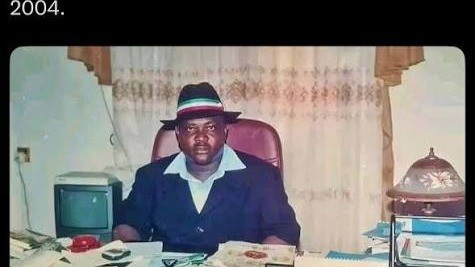
When politicians talk about “political structure”, what do they mean? For someone like Nyesom Wike, the answer is literal. He once described himself as “a field marshal” and boasted during the prolonged political crisis in Rivers state that “No victory in rivers without our grass-root structure”.But for many Nigerians the term is often perceived as an abstract concept, but really it is a tangible reality that is often times the reason for the success of many of Nigeria’s most prominent politicians. Going back to the case of “Mr project” in order to fully understand the FCT Minister’s rise to being one of the nations premier politicians, you have to look at his work at the grass-root level, with his first political role being the local government chairman of Obio/Akpor Local Government Area from 1999-2007. In fact it was in that office that he gained the moniker “Mr project” and the relationships he cemented there later found expression in the Grassroots Development Initiative, formally launched in 2012. The GDI had played and continues to play a massive role in Wike’s political career, with the GDI being 300,000 members strong as of Wike’s tenure as state governor and the GDI having internal rifts as a result of his public feud with his supposed men tee Fubara as recent as 2024 that threatened to shift the balance of power in Rivers state.
Wike’s career is a remarkably consistent climb from local government chairman to national prominence and his career thus far highlights the importance of grassroots governance. Of course, it would be dishonest to pretend that local politics alone carried him this far, because the truth is elite alliances, party machinery and political appointments all played their part. But what made those advantages durable was that they rested on relationships he had spent years cultivating at the grassroots. But asides from Wike we also would be looking at another prominent figure in the political class in the person of Rabiu Kwankwaso whose story is not as straight forward. Kwankwaso’s story is a cautionary detour that arrives at the same truth. He first became governor of Kano State in 1999 on the strength of elite party connections, not a grassroots following. Four years later, voters ejected him from office, which is a rarity for a sitting governor . One of the reasons for his ejection from office was because his administration had failed to sink roots into the lives of ordinary communities. It was only after that defeat, and an eight-year exile from state power, that he returned in 2011 with a deliberate strategy to build what he had been missing: a structured, ward-level movement popularly known as the “Kwankwasiyya” movement, which anchored itself on mass education, rural infrastructure, and the direct delivery of public goods to the local level. The result was not just a second term but a political machine that outlasted his governorship and turned him into a permanent force in Kano. Wike built his structure from the council secretariat outward; Kwankwaso built his from the governor’s office downward, but only after learning the hard way that without local roots, political power in Nigeria is temporary. Both stories return to the same stubborn fact that money matters, elite endorsements matter, party machinery matters, but none of them seem to matter for very long unless they are anchored in something much harder to build, and that is a genuine grassroots structure. Power in this country is not issued from Abuja or a party secretariat, it is cultivated in the thousands of small, unglamorous spaces where local governance lives or dies.
And if these sound like isolated stories, they are not, the names are different, the states are different but the pattern rarely changes. Across Nigerian politics, the men and women who endure are almost never the loudest voices on television; they are usually the ones who spend years patiently building networks at the ward, local government and community level before the rest of the country ever learned their names.
Now, looking at the two individuals who are at the peak of their powers critically. With Nyesom Wike having served as a two term sitting governor of rivers state and the current Minister of the Federal Capital Territory and Rabiu Kwankwaso being a political juggernaut in the North so much so that even though he has not held an elected position since 2019 he still has undoubted impact and influence over Nigerian politics today. The success of these two individuals as we earlier discussed is tied to their work at the grass root level. The question this essay is asking and equally is trying to answer is, “why does the Nigerian public care so little about local governance, when the same individuals we complain about put grassroots politics in such high regard?” One might argue that the reason for the Nigerian public’s apathy towards local politics (and honestly the Nigerian public’s apathy towards politics in general) is as a result of decades of broken promises. And the fatigue Nigerians feel towards politics is real and it is earned. Local government after local government has been either starved of funds, hijacked by state governors, or reduced to a salary-paying machine that delivers nothing resembling development. Ironically, none of that has made local government politically irrelevant, if anything, it has made it even more valuable. Even where councils struggle to govern effectively, they remain the first place where loyalties are built, supporters are recruited and political careers quietly begin.The natural response of many Nigerians has been to look away, to treat council elections as a joke, to pour one’s political energy(if there is any left) into the drama of the presidency. But there is an uncomfortable truth that the careers of Wike and Kwankwaso force us to confront and that is while ordinary Nigerians were looking away from local governance, ambitious politicians certainly were not. Whether by careful design or simple political instinct, they recognised that every broken local institution left behind something valuable: a vacuum waiting to be filled. Where local governments failed to earn trust, personal political organisations could step in and build it instead…Wike’s GDI and Kwankwaso’s Kwankwasiyya are not merely campaign tools; in many communities they have often appeared more present and more responsive than the local council itself. Public apathy did not weaken these politicians, if anything, it left them with an almost empty field on which to build. The less attention ordinary Nigerians paid to wards, party units and council politics, the easier it became for disciplined political organisations to dominate those spaces. And once those spaces are controlled, today’s ward structure quietly becomes tomorrow’s governorship campaign and eventually tomorrow’s national influence. To remain on the sidelines, then, is not to punish a broken system,rather it is to hand the keys of that system permanently over to the people who broke it. The only exit from that cycle is for citizens to re-enter the local arena, not with naive hope, but with the hard-nosed understanding that whoever controls the ward, the unit, and the council controls the raw material of democratic power. Remember the local government chairman you don’t care about today might be the next “Mr project” or the leader of a different colored cap wearing grass-root machine tomorrow, so for God’s sake please find out who your local government chairman is.
Thanks for reading. Write back: we read every letter.
Keep walking
More from the archive
Essay
Worldview Through Fiction #2: The Argument and the Machine
A lot of political discussion now happens online. We are able to make arguments about corruption, criticise a government, defend a candidate or explain a political issue to thousands of people in a few minutes. As a…
Essay
Worldview Through Fiction #1: Present Bias and Our Finances
Thinking back to one of my favourite Nickelodeon cartoons, Zuko’s character arc from Avatar: The Last Airbender is a good example of present bias and how psychological traps manifest in our daily financial choices. Zuko…