How long and How many?

This past week I watched a video that made a confident claim about how societies can change. According to the short Youtube clip, once the square root of the population changes its mind about something then societal change comes about. The question of how a society can be changed, is a question that has been of interest to me for a while. In addition to that, the number the video put forward is so small. Take a country like Nigeria for example that has 200 million people, the square root is about 14,000. If that were true change would be within reach of a quarter of the national stadium here in Abuja. But it isn’t.
I found that the idea has two ancestors. Neither fully said what the video I watched was trying to express, but they are the closest thing to what was said originally. The first source is Derek de Solla Price, who spent his career measuring the growth of science. While looking at who writes scientific papers, he proposed that half of the literature in a field comes from the square root of the number of people publishing in it. If 10,000 people write on a subject, about 100 of them would produce half of everything written. The idea now travels online as a rule about who does the real work in any office or team. It began as a claim about publishing, and it has struggled even there. When Paul Nicholls tested it in 1988 against real and simulated records of who published what, the results did not support it.1
The second source is the Transcendental Meditation movement. Its researchers describe what they call the Extended Maharishi Effect. When a group equal to the square root of 1 per cent of a population practises the movement’s advanced meditation together, they say, crime, accidents and war decline across the whole society.2 This is the only version I found that says that the actions of a square root of the population changes a society. The research behind it however comes largely from the movement’s own institutions. In 1990 Philip Schrodt, then at the University of Kansas, reviewed a study of the effect published in the Journal of Conflict Resolution. He found problems with how it measured its key variable and how it ruled out other explanations. He also pointed out that if the theory were true, it would contradict almost everything we understand about cause and effect in social behaviour.3
So the square root theory has two homes. One is a pattern in academic publishing that fails its own tests. The other is a claim about meditation whose evidence has been sharply criticised. Thankfully, for understanding how a culture actually changes, there is better evidence, and the numbers it gives are far larger.
Four numbers for one country
Take a country of 200 million people, how many of them does it take to change things? The meditation claim says about 1,400. The square root of the whole population, the video’s version, says about 14,000. Erica Chenoweth’s research on protest movements points to 7 million. Damon Centola’s experiments point to 50 million. The largest of these is about 35,000 times the smallest.4
Centola’s figure comes from an experiment at the University of Pennsylvania. In 2018 he and three colleagues put 194 people into ten online groups of 20 to 30 and paid them to agree on a name for a face shown on screen. Once a group had settled on a name, the researchers added a committed minority who pushed a different one. The largest minority that failed made up 21 per cent of its group, and the smallest that succeeded made up 25 per cent. In one trial, a single extra person turned failure into success. Their model also predicted that in populations above 1,000, the tipping point stays at the same share of the population however large it grows. A fixed share of a growing population keeps growing with it, which a square root never does. Centola is careful to say that 25 per cent is not a universal value, and earlier studies had suggested anything from 10 to 40 per cent.5
Chenoweth’s figure answers a different question. With Maria Stephan, she studied 323 campaigns between 1900 and 2006 that tried to remove a national leader or win independence. She later found that campaigns which drew 3.5 per cent of the population to their largest single event had almost always won. She calls the figure a descriptive statistic based on past movements, and she has found two exceptions, Bahrain in 2011 to 2014 and Brunei in 1962. Most of the campaigns that succeeded never reached 3.5 per cent at all.6
Each number is a measure of a different kind of work. Price measured the concentration of academic publishing, Centola studied how groups abandon established conventions, and Chenoweth examined participation in campaigns against governments. None gives us a universal number for changing society. What they do show is that the scale of participation depends on what people are trying to change and how that change is supposed to happen.
How long it takes
Footbinding is the clearest case I know. Chinese families bound their daughters’ feet for about a thousand years, and the practice ended within a single generation. Gerry Mackie, writing in 1996, argued that the reason footbinding lasted for so long was because each family’s choice depended on what every other family expected, especially when it came to marriage. A family that stopped alone put its daughter’s marriage prospects at serious risk. The practice ended when campaigners formed associations of parents who pledged that they would not bind their daughters and would not let their sons marry women with bound feet.7 Once enough families had promised together, no family had to go first by itself.
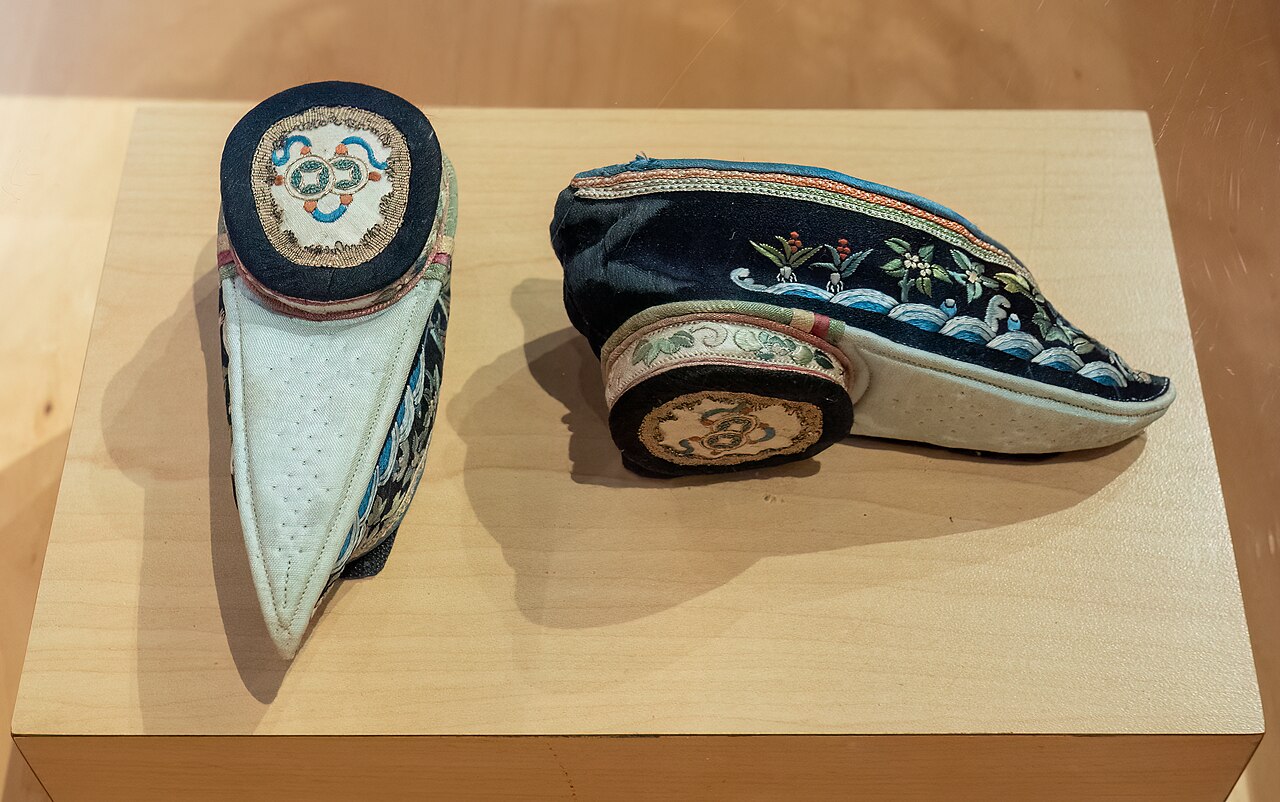
Political campaigns seem to run on a shorter clock though. Chenoweth has said that the average nonviolent campaign reaches its goal in about three years. Even that is longer than most of us imagine when we picture a revolution, because what we often times remember is the final march or the big “finale” so to speak.
Centola’s experiment helps us to understand why change can look so sudden from the outside. Groups below the threshold barely moved. On average, only 6 per cent of their members took up the new name by the end of the study.5 A group one person short of the tipping point looked, to anyone watching, much like a group that would never change, and in one trial a single extra person was all that separated the two.
Polio in the North
In 2003, political and religious leaders in Kano, Zamfara and Kaduna told parents not to let their children be vaccinated against polio. They said the vaccine might be contaminated with anti-fertility agents, HIV or cancer-causing agents. Their fears were not unfounded, because the rumors weaponized lingering public distrust following the highly controversial 1996 Pfizer Trovan clinical trial in Kano, where 11 children died during a drug test for meningitis.8
Nevertheless that year Nigeria accounted for 45 per cent of the world’s polio cases. The federal government had the vaccine tested abroad, and the boycott’s supporters rejected the results. Kano’s ban ended in July 2004, after state and religious representatives watched the vaccine being tested in South Africa, Indonesia and India, and Kano’s own team came back recommending an Indonesian supplier.9 Over 2004, the number of newly paralysed children in Nigeria rose from 355 to 792.10
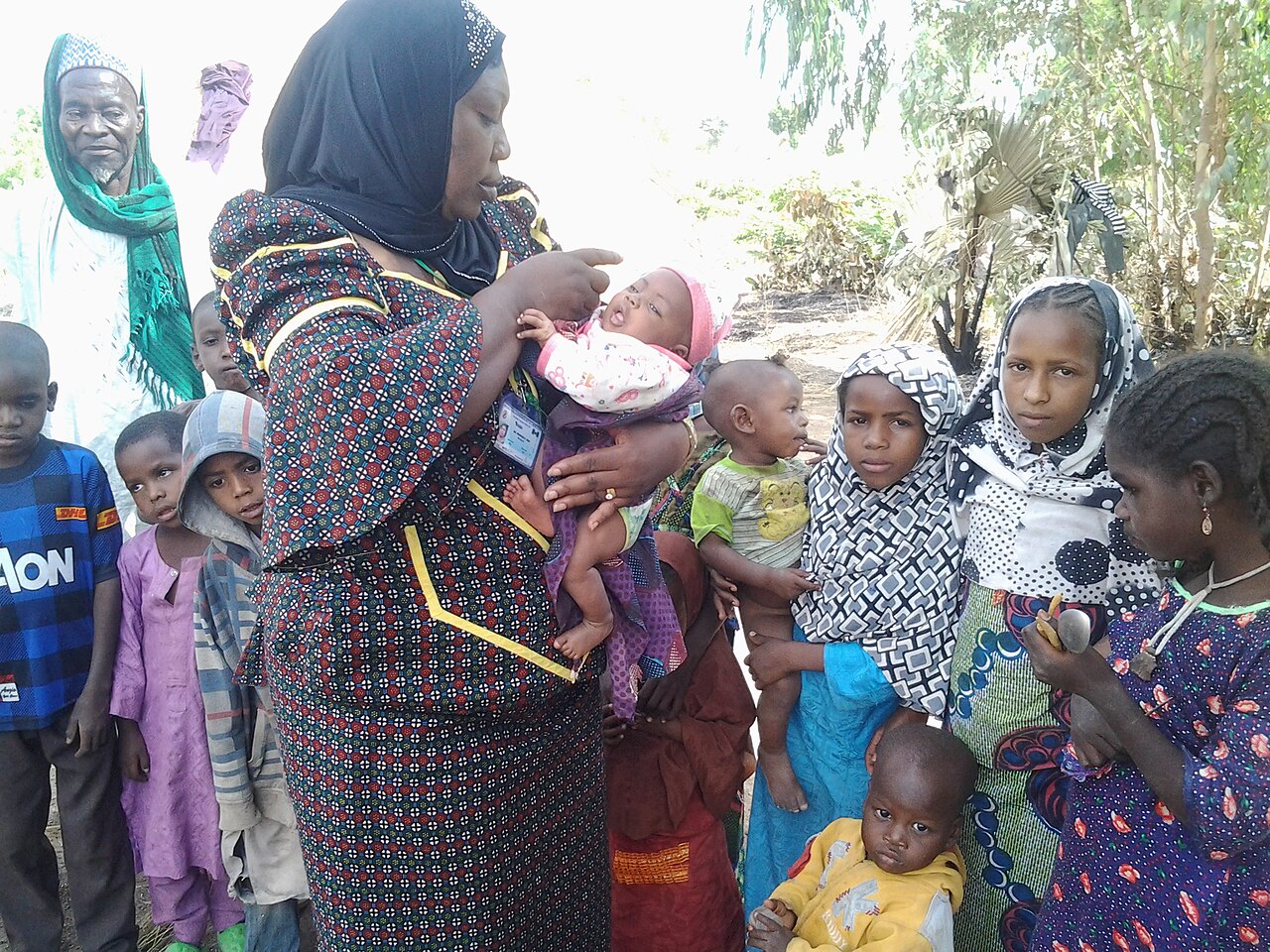
The ban lifted in July 2004, but the distrust it had fed lasted far longer. In 2008, new infections tripled again, to 788.10 What broke the deadlock was slow work by people the community already trusted. Northern traditional leaders set up a committee that sent vaccine experts, doctors, religious leaders and anti-vaccine campaigners to laboratories in South Africa, India and Indonesia, with Jama’atu Nasril Islam paying for the trip. The Emir of Argungu, one of its members, describes what came after the tests. Rulers vaccinated their own children in public, in front of the media, and some vaccinated themselves several times to convince the doubters.11 By early 2009, imams at Friday prayers were urging worshippers to immunise their children, and traditional leaders were tracking the children who had not been vaccinated.10
The Kano Polio Victims Trust Association was formed and it began with eight members, and eight years after its founding it had 2,350. Its members travelled with vaccination teams to clinics and schools and one of them, Yusuf Umar, would tell waiting parents to look at his legs and ask whether they wanted their child to end up the same way.10
In 2018 the Sultan of Sokoto, speaking through a representative, said that reported cases fell from more than 800 to under 100 within a year of the traditional leaders joining the campaign.12 Africa’s last case of wild polio was found in Borno State on 21 August 2016, and on 25 August 2020 the whole African region was certified free of it.13
What kind of involvement counts
In Issue 3, I argued that social media has made political expression cheap while organisation stays as hard as ever. The research in this issue sharpens my previous argument. None of these people were just expressing support. Centola’s experiment showed how a committed minority could overturn an established convention without abandoning its position. Chenoweth counted people physically present at the largest event of a campaign. Mackie’s families signed pledges their neighbours could hold them to, while Kano’s polio survivors went out with the vaccinators for years.
This is the part that should be encouraging. Across northern Nigeria, Vaccination became more widely accepted through a process that did not require everyone to agree at once. What mattered was the people trusted the messangers and they continued to show up. A post Costs nothing and commits no one. A pledge you sign in front of your neighbours costs something. The people who accompanied vaccination teams, made public commitments and held others accountable were doing something more demanding. They were able to help in making a different form of behaviour outside the established norm possible in their communities.
What this means for Corruption
The same trap runs through corruption in Nigeria. Three researchers at the universities of Gothenburg and Lund, Anna Persson, Bo Rothstein and Jan Teorell, interviewed people in Kenya and Uganda and concluded that anti-corruption reforms in such countries keep failing because they misread the problem. Most reforms assume that someone at the top can be trusted to police the officials below. Where corruption is the normal way of doing things, that assumption breaks down, and corruption behaves like a collective action problem instead.14 An official who refuses a bribe alone pays the cost and changes nothing, similar to the Chinese family that stopped binding feet before anyone else did.
Apart from the other African nations that were just mentioned, Nigeria has evidence of its own to share. In 2016 Chatham House and the National Bureau of Statistics surveyed households in Adamawa, Benue, Enugu, Lagos, Rivers, Sokoto and the FCT. In Enugu, more than 90 per cent of respondents said it was wrong and illegal for a law enforcement officer to ask for a bribe. Yet half of respondents believed their fellow citizens thought officers should ask. Leena Koni Hoffmann and Raj Navanit Patel, who wrote the report, call this pluralistic ignorance, where people privately reject a practice they believe everyone else accepts. They also found the pressure running through workplaces and families. Junior officers felt pushed by seniors, and refusers risked being shut out at work. Relatives and communities expected a “son of the soil” in office to bring benefits home, and the researchers found politics is widely understood as a sharing of the “national cake”.15
Two kinds of corruption need to be kept apart. One is the kind the everyday Nigerian faces, the payment at a checkpoint or for a hospital bed. The other is grand theft from public accounts, which the same report puts at close to $400 billion between 1960 and 1999.15 The evidence on shared expectations is strongest for the everyday kind. Grand corruption also needs courts, auditors and prosecutors, and a change in what neighbours expect of each other will not on its own recover stolen billions. They feed each other. An officer who learned at a checkpoint what everyone expects arrives at a budget desk with the same expectations.
There are signs nonetheless that the everyday habit is already under strain. In the most recent national survey, covering 2023, the National Bureau of Statistics and the UN Office on Drugs and Crime found that more than 70 per cent of Nigerians who were asked for a bribe had refused at least once. The share who suffered for refusing fell from 49 per cent in 2019 to 38 per cent. Among those who did pay, the share who reported it to an official body rose from 3.6 to 8.6 per cent, and reports that led to formal action against an official rose from 16 to 45 per cent.16 More than 70 per cent of Nigerians asked for a bribe refused at least once. Most of them have no idea how many others did the same.
The Chatham House report recommends much of what worked against polio. It suggests using religious and community leaders whom people already trust, and finding “trendsetters” willing to break the norm in public, so that others can see they are not alone. It also recommends making the honest route cheaper and easier than the bribe, for example by letting people pay fines online.15 Mackie’s footbinding pledges add one more piece. A commitment works best when it is made in public, inside a group whose members can hold each other to it, such as a professional body, a union, a congregation or a market association. Polio took more than a decade, and it needed rulers as well as believers.
Send us what changed near you
If you have watched a habit change where you live — a payment people once treated as unavoidable and then stopped making — write to the Letters page. Tell us what changed, roughly when, and who kept it going after the first push was over.
Notes
- Paul Travis Nicholls, “Price’s square root law: Empirical validity and relation to Lotka’s law,” Information Processing & Management 24, no. 4 (1988). Price’s best-known book on the growth of science is Derek J. de Solla Price, Little Science, Big Science (Columbia University Press, 1963). ↑
- David Orme-Johnson and Lee Fergusson, “Global impact of the Maharishi Effect from 1974 to 2017: theory and research,” Journal of Maharishi Vedic Research Institute 8 (2018): 13–79. The authors’ listed affiliations are Maharishi University of Management and Maharishi International University. ↑
- Philip A. Schrodt, “A Methodological Critique of a Test of the Effects of the Maharishi Technology of the Unified Field,” Journal of Conflict Resolution 34, no. 4 (1990): 745–755. The study he reviewed, by David Orme-Johnson and colleagues, appeared in the same journal in December 1988. ↑
- The working, for a population of 200 million: 1 per cent is 2 million, and the square root of 2 million is about 1,414. The square root of 200 million is about 14,142. 3.5 per cent is 7 million, and 25 per cent is 50 million. 50 million divided by 1,414 is about 35,360. The sources for each figure are in notes 2, 5 and 6. ↑
- Damon Centola, Joshua Becker, Devon Brackbill and Andrea Baronchelli, “Experimental evidence for tipping points in social convention,” Science 360, no. 6393 (2018): 1116–1119. ↑ ↑
- Erica Chenoweth, “Questions, Answers, and Some Cautionary Updates Regarding the 3.5% Rule,” Carr Center Discussion Paper 2020-005, April 2020. On page 4 the paper says that 83 per cent of the nonviolent campaigns that succeeded did so without crossing the 3.5 per cent threshold. ↑
- Gerry Mackie, “Ending Footbinding and Infibulation: A Convention Account,” American Sociological Review 61, no. 6 (1996): 999–1017. ↑
- In 1996, during a meningitis epidemic in Kano, Pfizer tested its new antibiotic, Trovan, on 200 children; 11 of them died, and a panel of experts set up by the Nigerian government found the company at fault and found that it had not obtained informed consent. People who backed the 2003 boycott cited the trial, and Muslim mothers vaccinated their children less once it came to light. Belinda Archibong and Francis Annan, “What do Pfizer’s 1996 drug trials in Nigeria teach us about vaccine hesitancy?,” Brookings, 3 December 2021. ↑
- Ayodele Samuel Jegede, “What Led to the Nigerian Boycott of the Polio Vaccination Campaign?,” PLoS Medicine 4, no. 3 (2007): e73. ↑
- Katy Pownall, “Imams switch sides in Nigeria’s polio war,” The Philadelphia Inquirer (Associated Press), 23 March 2009. ↑ ↑ ↑ ↑
- WHO Regional Office for Africa, “Polio Eradication – Stopping the menace of polio gives me joy as a father - His Royal Highness, the Emir of Argungu, Alhaji Samaila Muhammadu Mera,” 7 September 2020. ↑
- Maryam Ahmadu-Suka, “Emirs seek total eradication of polio,” Daily Trust, 10 August 2018. ↑
- WHO Regional Office for the Eastern Mediterranean, “WHO Regional Director Dr Ahmed Al-Mandhari congratulates the African Region on becoming wild poliovirus-free,” 25 August 2020. ↑
- Anna Persson, Bo Rothstein and Jan Teorell, “Why Anticorruption Reforms Fail—Systemic Corruption as a Collective Action Problem,” Governance 26, no. 3 (2013): 449–471. The study draws on interviews in Kenya and Uganda. ↑
- Leena Koni Hoffmann and Raj Navanit Patel, “Collective Action on Corruption in Nigeria: A Social Norms Approach to Connecting Society and Institutions,” Chatham House, May 2017. The survey was run with the National Bureau of Statistics in 2016. ↑ ↑ ↑
- United Nations Information Service, “Bribery becoming less accepted in Nigeria, says new report on corruption patterns and trends in the country,” 11 July 2024, reporting the third survey by the National Bureau of Statistics and the UN Office on Drugs and Crime; “70% of Nigerians refused to pay bribes in 2023 – NBS,” Daily Trust, 11 July 2024. ↑
Thanks for reading. Write back: we read every letter.
Keep walking
The issue before this one, and one more from the archive
Essay
Go and Fill That Stadium
Less than two weeks before the presidential election in February 2023, the Peoples Democratic Party called off its presidential rally in Port Harcourt. The Rivers state campaign council said the state government had…

Essay
Worldview Through Fiction #2: The Argument and the Machine
First published on LinkedIn on 21 September 2026. A lot of political discussion now happens online. We are able to make arguments about corruption, criticise a government, defend a candidate or explain a political issue…